 Image 1 of 2
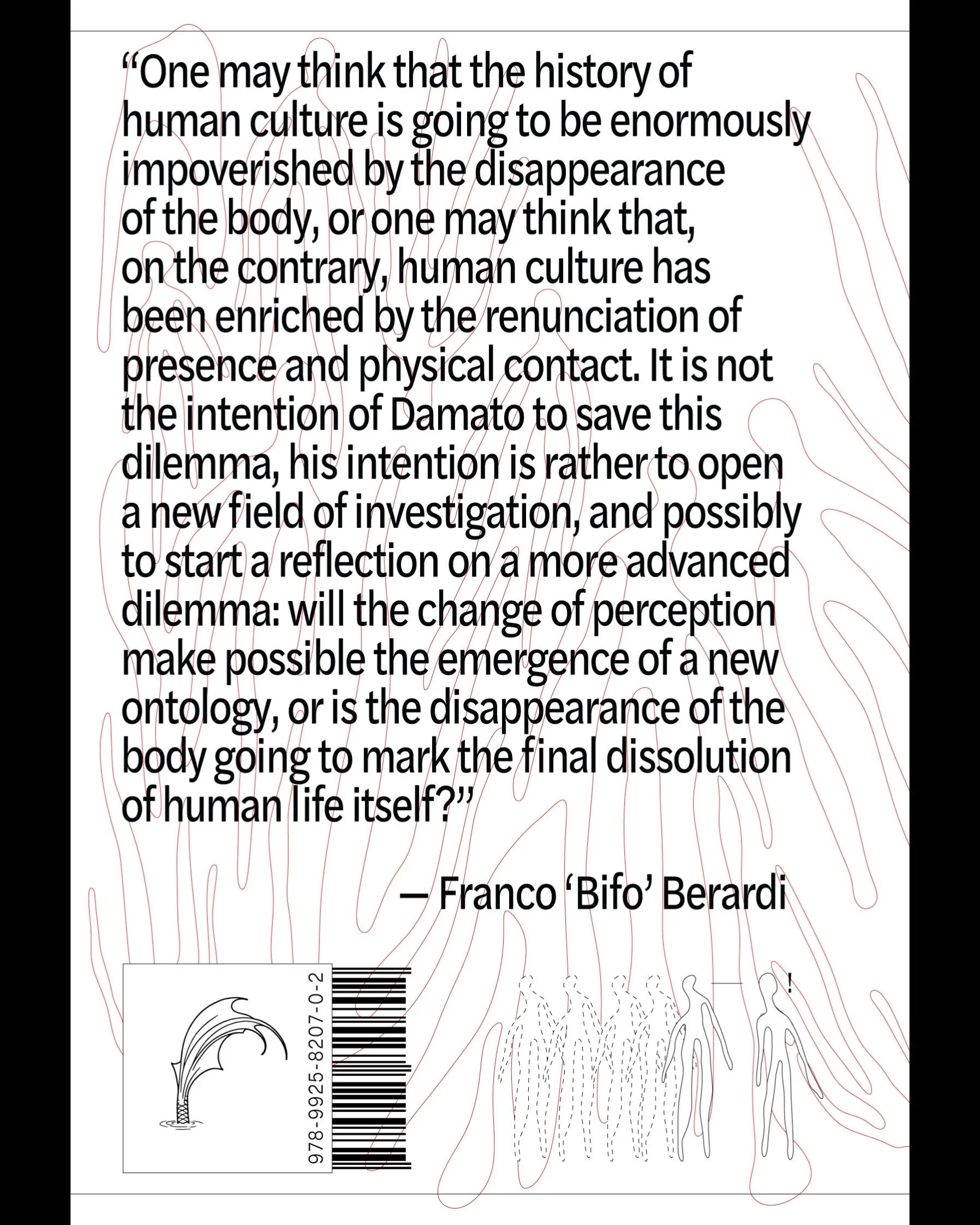 Image 2 of 2
Becoming Press/144 pgs
Excellent condition (New)
___________________________________________________________
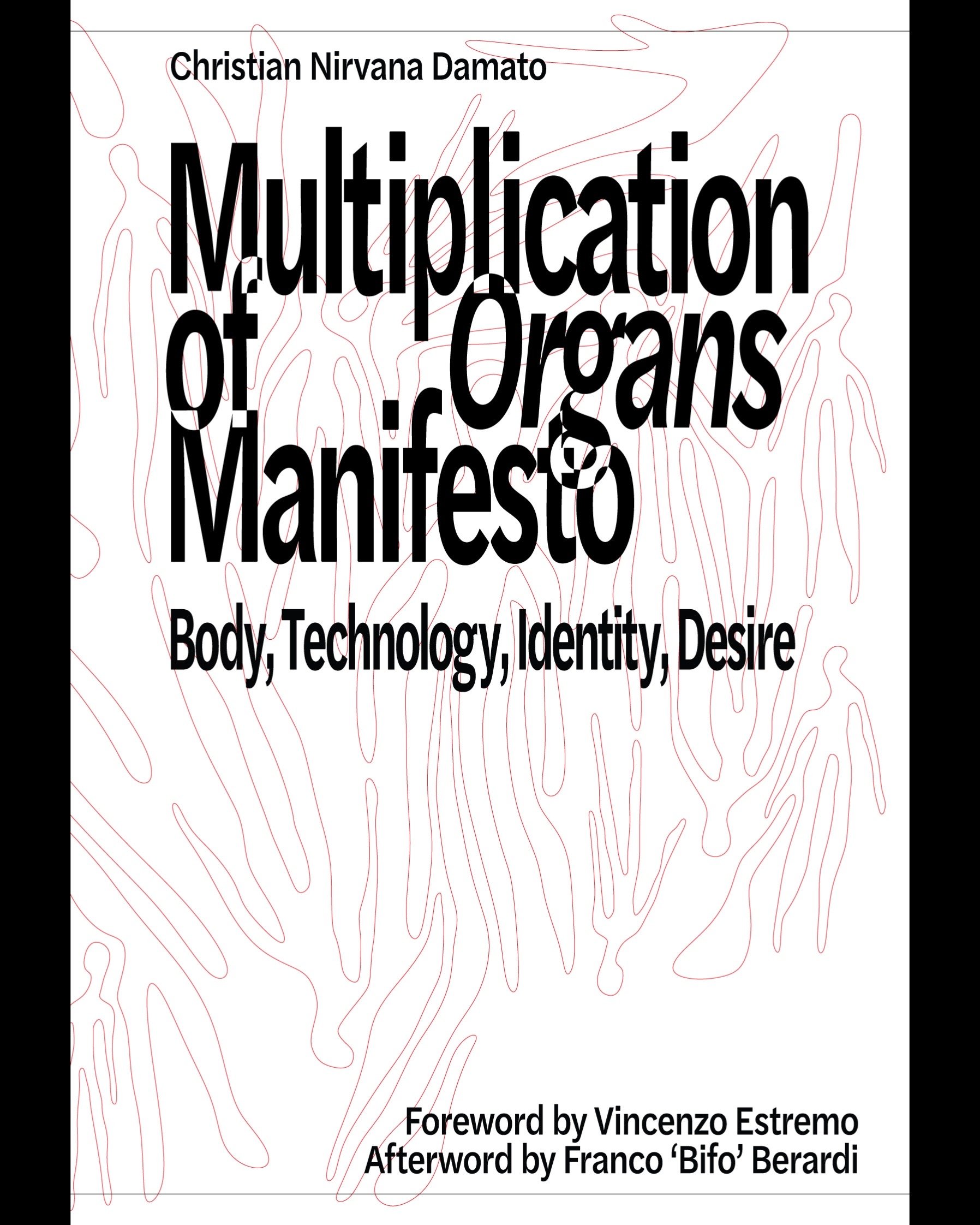
Multiplication of Organs Manifesto is an essay that delves into the transformations of sociality and sexuality in the context of digital technologies. Using an interdisciplinary approach that blends philosophy, erotic literature, media theory, psychoanalysis, gender studies, and neuroscience, the text explores how devices, platforms, and technologies shape and produce normative systems that influence our perceptions, desires, and relationships with others. By examining the interplay between desire and digital mediation and drawing comparisons with authors such as Deleuze, Ballard, Žižek, Butler, Preciado, Bataille, and others, this book aims to present a new theoretical, critical, and philosophical perspective in the contemporary discourse on the relationship between humans, technology, and society.
This book begins with an analysis of three iconic erotic texts from Masoch, Ballard and Bataille, and uses this analysis as the departure point for its main theoretical work on the four topics listed in the subtitle. The book passes through a lot of interesting phases, including an analysis of Phenomenology and Gucci, class struggle and OnlyFans and much more, until eventually arriving at the actual manifesto for Organ Multiplication and the beautifully named notion of the “Caged Sun”.
“Wearable technologies in the field of digisexuality—teledildonics, smart condoms, and brain-computer interfaces—increasingly affect contemporary subjects in all aspects of life: measurement, gamification, control, and prediction of performance, emotions, and time. All these innovations reprogram how we “construct” desire, which Damato redefines as statistical desire—that is, a form of desire founded on quantification, gamification, predictability, and actions we intend to perform.
At a more general level, Damato shows how digisexuality is rooted in the widespread unease with contact, with bodily proxemics: the discomfort with our own skin, aversion to being touched and to touching, resulting in contact avoidance. As sensorial experience is increasingly replaced by techno-semiotic exchange, perception is reconfigured; desire itself, through the hyper-semiotization of experience, is also transformed. This shift to digisexuality changes our very perception of reality. “Physical reality exists, but it is less and less the primary object of significant investment, and also of desiring investment—a cumbersome residue that we do not know what to do with.” The body is thus “no longer essential for communication,” increasingly “an embarrassing surplus in communication, a mass that we would be pleased to get rid of.” Damato's analysis focuses on the moment when this shift occurs (and is already underway): when our body is no longer “what we are,” where our self is located, but instead is experienced as something external—so that we become more “ourselves” in digital space than in our physical bodies.— Slavoj Žižek
About the author
Christian Nirvana Damato is a writer, curator, and independent researcher working in the fields of philosophy, technology, psychoanalysis, and visual culture. He teaches media theory at the IED in Turin and runs various workshops on publishing and writing. He writes for and collaborates with various magazines and publishing houses. He is the founder and editorial director of Inactual. He has also published Medial Disorders. Interpretive and Non-statistical Compendium of Technological Disorders. Vol I, with contributions by Geert Lovink, Alfie Bown, Isabel Millar, Eyal Weizman (Forensic Architecture) et al. (ed. by, Inactual, 2024) and Wearable Statistical Desires. Re-programming the performativity of the body through digisexuality (Mimesis 2025; Everyday Analysis, 2025) and Medial Disorders Vol II.
Becoming Press/144 pgs
Excellent condition (New)
___________________________________________________________
Multiplication of Organs Manifesto is an essay that delves into the transformations of sociality and sexuality in the context of digital technologies. Using an interdisciplinary approach that blends philosophy, erotic literature, media theory, psychoanalysis, gender studies, and neuroscience, the text explores how devices, platforms, and technologies shape and produce normative systems that influence our perceptions, desires, and relationships with others. By examining the interplay between desire and digital mediation and drawing comparisons with authors such as Deleuze, Ballard, Žižek, Butler, Preciado, Bataille, and others, this book aims to present a new theoretical, critical, and philosophical perspective in the contemporary discourse on the relationship between humans, technology, and society.
This book begins with an analysis of three iconic erotic texts from Masoch, Ballard and Bataille, and uses this analysis as the departure point for its main theoretical work on the four topics listed in the subtitle. The book passes through a lot of interesting phases, including an analysis of Phenomenology and Gucci, class struggle and OnlyFans and much more, until eventually arriving at the actual manifesto for Organ Multiplication and the beautifully named notion of the “Caged Sun”.
“Wearable technologies in the field of digisexuality—teledildonics, smart condoms, and brain-computer interfaces—increasingly affect contemporary subjects in all aspects of life: measurement, gamification, control, and prediction of performance, emotions, and time. All these innovations reprogram how we “construct” desire, which Damato redefines as statistical desire—that is, a form of desire founded on quantification, gamification, predictability, and actions we intend to perform.
At a more general level, Damato shows how digisexuality is rooted in the widespread unease with contact, with bodily proxemics: the discomfort with our own skin, aversion to being touched and to touching, resulting in contact avoidance. As sensorial experience is increasingly replaced by techno-semiotic exchange, perception is reconfigured; desire itself, through the hyper-semiotization of experience, is also transformed. This shift to digisexuality changes our very perception of reality. “Physical reality exists, but it is less and less the primary object of significant investment, and also of desiring investment—a cumbersome residue that we do not know what to do with.” The body is thus “no longer essential for communication,” increasingly “an embarrassing surplus in communication, a mass that we would be pleased to get rid of.” Damato's analysis focuses on the moment when this shift occurs (and is already underway): when our body is no longer “what we are,” where our self is located, but instead is experienced as something external—so that we become more “ourselves” in digital space than in our physical bodies.— Slavoj Žižek
About the author
Christian Nirvana Damato is a writer, curator, and independent researcher working in the fields of philosophy, technology, psychoanalysis, and visual culture. He teaches media theory at the IED in Turin and runs various workshops on publishing and writing. He writes for and collaborates with various magazines and publishing houses. He is the founder and editorial director of Inactual. He has also published Medial Disorders. Interpretive and Non-statistical Compendium of Technological Disorders. Vol I, with contributions by Geert Lovink, Alfie Bown, Isabel Millar, Eyal Weizman (Forensic Architecture) et al. (ed. by, Inactual, 2024) and Wearable Statistical Desires. Re-programming the performativity of the body through digisexuality (Mimesis 2025; Everyday Analysis, 2025) and Medial Disorders Vol II.